Search This Blog

Thursday, March 2, 2023

Romi Cohn (z"l) was born on March 10, 1929

"My biggest, what I was looking for it was the most, was not to stay alive or to die. The fear I should have, the fear from the Germans, I should be able to live without fearing those beasts, you know, these are my biggest dream and my biggest ambition."
— Romi Cohn.

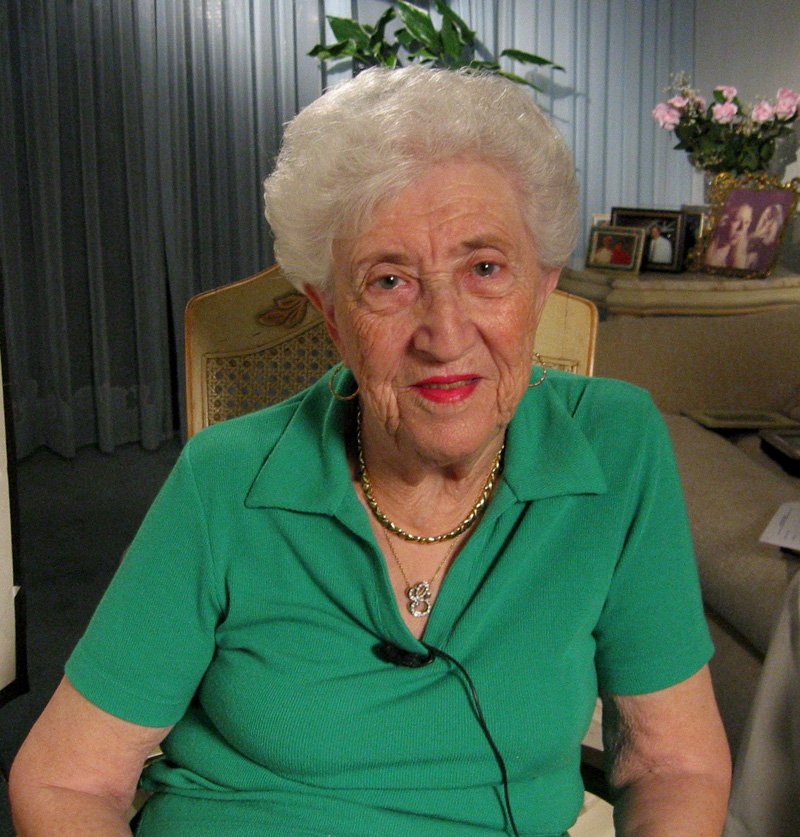
Avrohom “Romi” Cohn was born in Bratislava, Czechoslovakia on March 10, 1929. He was only ten years old in 1939 when the Germans invaded his country. During mass deportations of Jews from Slovakia in 1942, the Nazis granted his family an “economic exception” and they were allowed to stay. However, as the war raged on, the family realized that staying in Czechoslovakia had become too dangerous, and Romi was eventually smuggled over the border into Hungary.

Unable to speak Hungarian, Romi knew that merely opening his mouth exposed him as an illegal refugee. He settled in a small town and enrolled at a local yeshiva, where the headmaster was sympathetic to his plight. He continued his education until 1944. When Hungary formally joined the Axis and began mass deportations of Jews, Romi returned home to Czechoslovakia, this time carrying forged Christian identification papers.

Romi became an informal member of the underground and used his connections to help find housing for Jewish refugees and to supply them with false Christian papers. The identity papers he made were very realistic: a connection working at Gestapo headquarters supplied him with German seals to stamp the documents.

Eventually, Romi was arrested on suspicion of carrying false documents. After a daring escape, he fled to the mountains and joined the partisans hiding there. To reach the mountains, Romi forged a German military travel order, sending him to the last German outpost before partisan-controlled territory. “[The Germans] all shook my hand and wished me luck. They thought I was going to go strike a blow for the Reich,” Romi remembers. By the time he joined the partisans, the Germans were already in retreat. His brigade drove them further westward — all the while capturing, interrogating, and executing SS officers.
Romi Cohn at JPEF's
2013 Tribute Dinner

The Nazis were not the only danger Romi encountered while fighting in the partisan brigade. His captain gave him a false name — Jan Kovic — in order to protect him from the antisemites in his unit. In one instance, Romi noticed a German partisan behaving suspiciously towards him. He was afraid the man would try to kill him if given the opportunity, so he replaced his bullets with rusty ones before target practice one afternoon. The rusty bullet exploded in the man's machine gun, injuring his face. Preoccupied with his facial injury, the man stopped paying attention to Romi.

When Hungary was liberated, Romi returned to Czechoslovakia. He received a number of medals for his service with the partisans, including the Silver Star of the International Partisans — an honor shared by few others.

After the war, Romi emigrated to the United States and became a noted mohel (and businessman), performing over 15,000 circumcisions in his career. Were it not for the war, he would have gone to medical school to become a surgeon, he says. Romi passed away on March 24, 2020 of the COVID-19 virus. He is survived by his wife, Malvine.

Romi's autobiography, The Youngest Partisan: A Young Boy Who Fought the Nazis, was published in 2002. Though Romi was originally against the idea, the alarming rise of Holocaust denial around the world gave him the motivation to share his story. “...we have to keep in mind today, we live in a free country and we say, ‘This could never happen here’ which is a tremendous mistake. I come from Czechoslovakia — democracy in Slovakia was even superior to American democracy — total democracy. And if this could happen in a civilized country, overnight... within six months, propaganda turned the population completely - [before] all our best friends, our best neighbors, were living in harmony. All of a sudden, they became biggest enemies."

Visit www.jewishpartisans.org for more about Romi Cohn, including eight videos of him reflecting on his time as a partisan.

Featured Jewish Partisan - Bernard Musmand, born on March 3rd

"I disliked the Germans — as I mentioned many times, I spoke German fluently, I learned it in school and so on, and I knew it fluently. At the end of the war, I have refused to talk it, to speak it, and I have kept my word. I have not spoken German since then. I know it's hateful, I know what the Germans did for Israel, but I can't forget. The famous word, I can forgive but I can't forget."
— Bernard Musmand.
Bernard Musmand was born on March 3, 1930 in Metz, a city in northeastern France. Located on the border with Germany and Luxemburg, Metz shares many historic connections with its neighbors, dating back to its Celtic and Roman roots. In fact, many high-ranking officers of the Third Reich were born there. In a border city like Metz, it was only natural for the German language to be taught in schools - this skill ended up saving Bernard's life on numerous occasions.

When Bernard was a young man, the Nazis invaded and his family fled to the south of France, which was outside of German control. In order to attend the local boarding school, Bernard had to pose as a Catholic. One night, the school’s chaplain told Bernard and his classmates that they would participate in communion and confession the next day. Since Bernard didn’t know anything about Catholic confession, he spent half the night in the bathroom studying a Bible. He made such a convincing Catholic boy that the priest asked if he was interested in going into the seminary.

While studying at the boarding school, Bernard became a courier for the Sixieme — a resistance group based in the southern town of Rodez — and transported falsified papers for those escaping Nazi persecution. His confidence and youth were his best defenses during encounters with the Germans or French sympathizers. To ease suspicions, he would initiate conversations by asking for the time or a match in perfect German.

In May 1944, Bernard was sent to deliver a package to the owner of a hotel in a small town in Figeac. But the owner of the hotel refused the package, having been informed that Germans were coming to occupy the town and make arrests. Stranded in the town and frightened, Bernard hid the package behind some bags at the local train station. He spotted a German railroad policeman in his 50s and began a conversation with him. The policeman was pleasantly surprised that a Frenchman could be so friendly and speak such fluent German, and invited Bernard into his office for some chocolate. While safely hidden in the office, he saw hundreds of Frenchmen being forced onto trains to be transported to work camps in Germany. The policeman expressed great sorrow for these men. When the trains and the German soldiers had left, Bernard thanked the policeman for his kindness and went on his way.

When the Gestapo came to the boarding school looking for Bernard, the dean arranged for his escape before the Germans could capture him. Bernard went to Millaut and again joined the Sixieme, which had by then begun to collaborate with the Maquis armed resistance. Fourteen years old and very afraid, Bernard was sent on an ambush. He described the two hours before the battle, lying under cover and waiting for a German convoy to pass, as the longest two hours of his life. But once the convoy arrived and the orders were given to open fire, Bernard’s mind was so focused on the fighting that he had forgotten his fear.

Bernard Musmand's military card
When the French Army reformed, he was made Second Lieutenant. However, the desk job he received was not what Bernard pictured the war to be like — he wanted to be fighting the Germans on the front lines. He applied for transfer, but was rejected three times. Fed up, he finally revealed his true age and Jewish identity. The Army didn’t believe he was fifteen and a half. They demobilized him two days later, however, after having made contact with his parents.
“It was an exciting time, in certain ways,” Bernard remembers. “I wish and hope it will never come back, but everything counted and you felt life was precious.”
Since their textile business was lost during the war, Bernard's family emigrated to the United States, settling in Brooklyn. Bernard met his wife, Milicent, after graduating from Lowell. They had two sons, Jon and Fraser.
Bernard spent his final years in Maine, where he spent much of his time with family, friends and at the local synagogue. A long battle with a heart condition took his life on January 30, 2010.

Visit www.jewishpartisans.org for more about Bernard Musmand, including seven videos of him reflecting on his time as a partisan.

Friday, September 10, 2021

Looking Back on Jewish Partisan Gertrude Boyarski (z''l) During Women's History Month

"I...went back to the partisans that should take me to [commander] Bulak. And I said, 'You know [...] I want to come back because everybody's killed and I remain all by myself.' He said, 'Yeah, I know you girls want to come to the group to have a good time. You don't want to fight.' I said, 'No, I want to fight. I want to take revenge for my sisters and brothers and for my parents.' He said, 'Well, I'll take you in on one condition.' I said, 'What's the condition?' 'You'll stay on guard for two weeks, but a mile away from the group. We'll give you a horse, we'll give you a rifle, we'll give you a gun. And anything you hear, any little noise, you'll have to let us know.' I said, 'Okay.'"
–Gertrude Boyarski


Born in 1922 on the 2nd day of Rosh Hashanah, Gertrude ‘Gertie’ Boyarski was a teenager in the town of Dereczyn (Derechin), Poland.  She lived a quiet life with her family until the Germans invaded in 1941. Though the Nazis forced the majority of the town's Jews into a ghetto, they regarded Gertie's father – a butcher and a housepainter – as a 'useful' Jew, so the Boyarskis were moved to a guarded building just in front of the ghetto's entrance.

On July 24, 1942, a night of terror descended on the ghetto. The Germans began a mass killing of the town’s 3,000-4,000 Jews. The Boyarski family managed to escape to a nearby forest, where they hoped to join a partisan unit. To prove themselves to the partisans, Gertie's father, brother, and other Jews had to return completely bare-handed and attack the town's police station. They were successful, killing the guards and taking the station's stash of weapons and ammunition.  However, in the months that followed, Gertie and her family remained in a family camp with other noncombatant refugees. The camp lacked protection, and Gertie saw her mother, father, sister, and brother murdered before her eyes in surprise attacks by German soldiers and antisemitic Poles who hunted the woods for Jews.
Bereft of family and seeking revenge, she left the shelter of the family camp and sought to join a partisan detachment under the leadership of the Russian Commander Pavel Bulak, who initially brushed her off. But Gertie was insistent, saying, “I want to fight and take revenge for my whole family.”

Impressed by her conviction, Bulak agreed under one condition: she would have to stand guard alone, for two weeks, a mile from the partisan encampment. “I was alone in the woods ... each time I heard a little noise I thought it’s Germans… Two weeks – it was like two years.” But Gertie persisted and was accepted into the group. She fought with the partisans for three years, aggressively attacking German soldiers who came to the surrounding villages.

Gertrude went on to win the Soviet Union’s highest military honor, the order of Lenin. In honor of International Women's Day, Gertie and her friend – both teens – volunteered for a dangerous mission to demolish a wooden bridge used by the Germans. They had no supplies, so they hiked to a local village and asked for kerosene and straw. When told there was none in the village, Gertrude and her friends unslung their rifles and gave the villagers five minutes to find the supplies. The villagers quickly complied.

Gertie and her friend snuck up to the bridge, prepared and lit the fire. German soldiers saw the blaze and started shooting. In response, the women grabbed burning pieces of the bridge and tossed them into the river until the bridge was destroyed. "We didn't chicken out," says Gertie. This was just one of many missions Gertie and her fellow partisans completed.

In 1945, she married a fellow partisan, and they settled in the United States. Gertie still grapples with having lived through the war when so many perished. "I was the only one who survived. Why? Why me? I'm always asking that question." Her message to students studying the Holocaust is that “they should not be afraid of their identity – no matter what color, race or nationality – and they should fight for it.”

For more on Gertrude Boyarski, please see her short biography, the short film Jewish Women in the Partisans, and our study guide, "Gertrude Boyarski: From Frail Girl to Partisan Fighter."

Gertrude passed away at the age of 90 on September 17th, 2012 – the first day of Rosh Hashanah of that year.

Wednesday, June 23, 2021

"The Partisan, 1942" — a poem by Laura Morowitz in memory of Faye Schulman


Faye Schulman

My heart lies in the woods

Red heart on soft white snow
Songs written in blood, not lead
written in red
Sheyne mydelach sinking to her knees
and weeping for her comrades her mother her lover
longing for warm blankets and warm food
Meyn sheyne mydelach not long for this world

Clean your gun, my pretty one, the smell of fire
clings to your hair
every night and every night again
resounds with footsteps cracking twigs distant thunder without rain
A crack a burst an echo
someone’s sister someone’s captain someone lost
you see them lying on a grave of leaves
Unblinking

Meyne Ketzele, my  kitten, pull your fur hat tighter round your chin
Begin again try to forget, to fargessen, to erase
Grip your pistol hold it tight don’t think
Here, beneath the branches shrouded in snow
The trees await their future lives as coffins
To live means for the moment not to know
But only to keep moving.


Laura Morowitz is a Professor of Art History at Wagner College New York. A  specialist on art in turn-of-the -century, as well as Nazi-occupied Vienna, she is the author of numeorus books and articles. She is the co-organizer, with Dr. Lori Weintrob of the international symposium on Heroines of the Holocaust: New Frameworks of Resistance, to be held on the Wagner College campus June 15-16 2022.