Search This Blog

Thursday, January 11, 2024

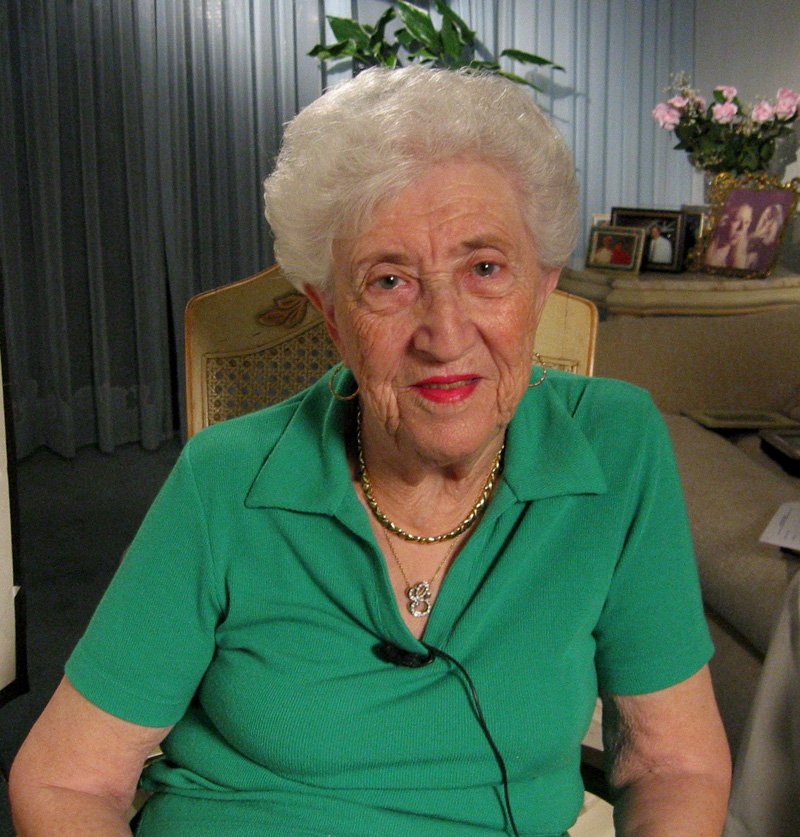
Jewish Partisan hero Mira Shelub turns 102 on January 13, 2024

"Somehow, you know, when we came out from them, from the ghetto, I cannot tell you how good it felt to breathe the fresh air, to know that we are free, to know that we can go. Okay, there were difficulties, obstacles, but we knew that we can go, that nobody will stop us, to breathe the fresh air, to see the trees. It was something, a special, special experience and then we came to the forest. We came to the forest and then, and we were lucky enough, I mention again that we were nice, young, pretty so they accepted us, and we joined the Partisans." — Mira Shelub.

A Polish Jew born in what is now Belarus, Mira Shelub joined a partisan group that operated in the forest near her native Zdziedciol at the age of 18. With her family, she escaped Zdziedciol’s ghetto in 1942 as the Germans began killing off the population.

Mira’s group engaged in sabotage against the Nazis and their Polish collaborators by disrupting communications and transportation to the war front. They blew up trains, attacked police stations, and stole food that had been provided for the Germans by peasants.

In Mira’s group, women comprised about a quarter of the partisans. They did the cooking, took care of the laundry and provided other vital support.

Nochim Shelub
While working with the partisans, Mira met her husband Nochim, who was the leader of the group. Nochim had first been in a mixed group run by Russians. However, anti-Semitism was common among the non-Jewish resistance fighters, and so he decided to form his own unit, though he still continued to coordinate activities with the Russians.

On a few attacks, Mira carried extra ammunition for her husband’s machine gun. In the summer, the unit slept on the ground in the open forest; during winter they took refuge in underground huts (called zemlyankas), or with sympathetic peasant families. Constant movement was a necessity to avoid detection. When it snowed, they had to alter their tracks into confusing patterns so that they could not be followed. Mira recounts:

“In the forest, we did not only fight a physical battle, but also a spiritual battle. We were sitting around the fire, singing songs together, supporting each other and dreaming about betters days and a better future… a better tomorrow.”

After the Russian liberation in 1944, the couple made their way to Austria, then finally to the United States, where Mira had contacts with relatives. They settled in San Francisco, and soon after Norman opened a sandwich shop near the Embarcadero. They had three children – a daughter and two sons. Mira lives in San Francisco and continues speaking with students and educators about her Jewish partisan experience.

In February 2019, JPEF Director of Development and Outreach Sheri Rosenblum enjoyed a lovely visit with Mira and her daughter Elaine in San Francisco.

Mira recounts the extraordinary story of her partisan experience in her memoir Never the Last Road: A Partisan's Life. Visit www.jewishpartisans.org for more about Mira Shelub, including seven videos of her reflecting on her time as a partisan.

Jewish Partisan Lilka (Ticktin) Bielski (z''l) – born January 13, 1926


Lilka Ticktin was born in Bialystock, Poland, on January 13, 1926. Before she was a year old, her family settled in Novogrudok. Her mother, Zina, was from a well-to-do, cultured family. Her father, Alter, had a thriving business collecting rags and processing them in multiple warehouses to produce paper. The Ticktin family was well-known in the shtetl, and often paid for weddings, a bris, or a Shabbos meal for those who couldn’t afford it.

Lilka went to a local Hebrew school, then followed in the footsteps of her older brother, Meir, and attended high school in Bialystock. At the age of 13, her mother got sick and passed away. Relatives came to stay with the children, until Lilka was sent back to Bialystock to finish her schooling. Her father eventually remarried. The new stepmother was a divorced, single mother, who worked as a seamstress to make ends meet. 

When the Russians invaded the area, and the family fled to Lida, moving into a small apartment. Alter also brought his wife’s family to Lida, including her two sisters, and her mother.

Meanwhile, Lilka’s friend lived in the same building as Tuvia Bielski, who was working in Lida as a bookkeeper. The two young girls were captivated by him and often spied on Tuvia through the window. Once, he caught them, finding their infatuation amusing, and offered to take them to the movies.

In 1941, the Germans bombed Lida, and the family escaped to the countryside, staying with peasants. When things calmed down, they went home. Tuvia also left Lida, returning to his family home in Stenkevich. When the Germans entered Lida, the Jewish population was divided into three ghettos: Postawska, Koszarowa, and Piaski. Lilka remembers that she did not feel particularly afraid, and even regarded some of the Germans as friends.  

All that changed later when the SS entered the picture. The evening of May 7, 1942, all three ghettos were fenced in. The next day, the Germans went house to house, rounding up all the Jews. Lilka was taken out with her family, wearing only a nightgown and shoeless. All the Jews were lined up and told to go to either the right or the left. Because her stepbrother was of use to the Germans, he had special privileges and he, his mother, Alter, and Lilka were told to go left. His aunt and grandmother joined those going right. When the selection was finished, those who went to the right were marched out of town, lined up by a pit, and shot by the Germans. Over 5,500 Jews were massacred. Those who remained in the ghetto were herded into one small area and told to be ready for work at 6 AM the next morning. 

Tuvia, meanwhile, after seeing his family killed by the Nazis, had taken refuge in the woods surrounding Stenkevich, together with his brothers, and a handful of family members. He sent letters into the ghetto, urging the Jews to leave immediately, before they were killed. He wrote, “I don’t promise anything, but at least you’ll be free.” Alter insisted that he was staying where he was, adamant that he would share his fate with his fellow Jews.

One night, Lilka was awakened by her father shaking her and saying, “Get dressed, we are leaving tonight.” She was stunned by her father’s change of heart, but quickly got ready. Alter told her, “I dreamed that you survive. I’m not sure about me, but in my dream, you live through this.” They crawled under a fence, and remained crawling for a full kilometer, until they were met by Tuvia. He sent them to the family camp with his brother, Asael. That group now numbered twenty-one.

There were grumblings among the seventeen already in the group about adding more mouths to feed and take care of, but Tuvia was insistent that he would save as many Jews as he could. It became his primary mission: “I would rather save one old Jewish woman than kill ten Nazis”, Lilka remembers him saying.

The group continued to grow; first, friends and relatives, and then Jews they had never met, who escaped from the ghettos or from trains bound for the extermination camps, motivated in part by knowing they had a place to go – The Bielski Camp. Hunger was widespread in the area and the Jewish refugees, the Belarusian peasants, and the Nazi army, all competed for what little food there was.  

The Bielski partisans regularly sent out food missions, to help procure food for their growing numbers. Alter insisted on joining one of these missions. At age 49, he was considered old and entitled to stay behind at the camp. Even though a tearful Lilka begged him not to go, he insisted on joining the group. That was the last time she saw her father. The group was out late, and the sun was rising.  Rather than risk discovery in the dawning light, they opted to stay in the house of a local farmer until night fell again. The Nazis came and slaughtered them all, save for one, who hid beneath a stove. 

Almost a year later, Lilka’s stepmother became extremely ill with the flu. Her son decided to bring her to the home of local peasants, where her sister had been in hiding. The Nazis discovered them, and they were slaughtered. 

Now, two years after she left Lida for the camp, Lilka found herself all alone. But the relationship between Lilka and Tuvia had been growing. At first, he would just make sure she always had enough to eat, and always showed her kindness and compassion for her circumstances. Soon, the awe and admiration the young Lilka had for the commander turned to mutual love. Tuvia continued to look out for Lilka and they eventually married in the woods. The marriage that lasted for 45 years, until Tuvia’s death in 1987. Lilka never looked for any privilege as the Commander’s wife, and she often did her part, standing guard over the camp overnight, gun in hand. She made formal reports to the Commander in the morning about the night’s activities.

As the Commander’s wife, she also played the part of hostess, entertaining the leaders of the Russian partisans. It was vital for the group to be of use to the Russian Otriads (or brigades), so they provided leather boots and gun repair in the workshops of the Shtetl Bielski, as it became known.

Despite the misgivings of those in the group, Tuvia felt it was vitally important that they accept all Jews into the community.  “As a small group, we have no chance,” he said, “we will survive in the woods, at least some of us. If we stay in the ghetto, we will all perish.”

The group, eventually numbering over 1,200 people, survived the war. In July of 1944, as the Red Army advanced and the Nazis retreated in panic. The day of liberation came unexpectedly. Much of the group returned to Novogrudok, but found their homes were now occupied by the local peasants. 

Lilka and Tuvia soon realized they had to leave Novogrudok; Tuvia was too well known, and they found out the NKVD, the predecessor to the KBG, was looking for him.  Tuvia and his brother Zus, along with their wives, Lilka and Sonia, and younger brother Aron, boarded a train heading west. It was a treacherous journey, as they were stopped numerous times by the NKVD.

They continued west, through Czechoslovakia, Hungary, and Romania, where they settled for some time. While living in Romania, the group was contacted by a Zionist organization, promising legal passage to Palestine.  

They boarded the ship to Palestine and arrived in the promised land just in time for Israel’s war for independence. Tuvia went from fighting in one war to fighting in another. Lilka gave birth to a girl in Palestine in 1946. Tuvia and Lilka and their infant girl, Ruth, were given housing in the settlement called Holon, south of Tel Aviv. 

Eventually, war broke out during the fight for Israel’s independence. Tuvia was involved in the fighting but assured a worried Lilka that he would return soon. It was Yom Kippur, and he still hadn’t returned. Lilka knew something was wrong.  She walked to the military headquarters to see if she could get any news. They explained that the truck Tuvia was traveling in had been blown up in the desert and all of the occupants killed.

With a heavy heart, Lilka returned to Holon. Night fell, and she prepared to sit Shiva, tearing her clothing in the Jewish tradition. Suddenly, her young daughter stood up in her crib, calling “Aba, Aba” (father). Lilka turned to the door and could not believe her eyes. There, stood Tuvia, dirty and exhausted. His truck had exploded, but he had survived and walked through the desert for three days to return to his family.

In 1952, Lilka had another baby, a boy, who they named Meir Aztzmon, after Lilka’s brother. Ruth affectionately nicknamed him Mickey.

Tuvia soon began to develop health problems and was diagnosed with a bleeding ulcer. At the urging of two brothers, who had immigrated to the United States prior to the war, he made the journey to New York in 1955 for an operation. Lilka and her two children followed in 1956, where they eventually added a third child, son Robert. Lilka lived a fairly ordinary life in Brooklyn, raising her children and adjusting to life in a new country. She enjoyed watching her children grow up, get married, and have children of their own. Tuvia’s family and other relatives followed, also settling in Brooklyn. Lilka loved cooking for the holidays and spent winters in her later years of her life in Hallendale, Florida. Tuvia and Lilka eventually had nine grandchildren and one great-grandchild. Presently, they have two more great-grandchildren on the way.

Tuvia died in June 1987 and Lilka in September 2001. They are buried side by side on a hillside in Har HaMenuchot Cemetery, overlooking Jerusalem.  

Monday, July 3, 2023

Celebrating Joe Kubryk's 97th Birthday - July 1st

"We had a very difficult time in the partisans among our own soldiers. What happened is we had Ukrainians, we had Poles, we had Polish soldiers that escaped from the prisons of Juaros and came to the partisans. And we had Russians. None of them really liked the Jews." - Joe Kubryk on being a Jewish partisan.


Joe Kubryk was born in the Russian Ukraine, not far from Odessa, on July 1st, 1926. Before the war, the Kubryk family did not experience much antisemitism, but after the war broke out, Joe’s village was filled with Ukrainian fascists, who cooperated with the Germans to kill Jews. When Joe saw the Germans rounding up his classmates, he knew he had to run for his life. In August 1941, not long after his friends were taken by the Nazis, Joe left the village. He found a Ukrainian farmer who hired him as a farmhand. The farmer had no idea Joe was Jewish as Joe spoke fluent Ukrainian. While Joe cried himself to sleep at night, he never let anyone see him doing it. He didn’t want to explain why he was crying.

Near the end of 1941, Russian partisans came scavenging for food at Joe’s farm. Curious, he asked them who they were. “Russian partisans,” came the reply. “Who are you?” When they heard he was Jewish and alone, they said, “You are one of us,” and took him to a camp in the forest of Drohobicz.

A few months after Joe arrived, a junior secret service was formed. Joe and the other teenagers began serious training in spying — learning how to recognize guns, artillery pieces and officers’ insignia. They were “toughed-up” in the training, taught secret codes and the rules of espionage. The Junior Secret Service spied on German troops. Platoon by platoon, they counted men, checked equipment, and noted who the ranking officers were and where they were camped. They also provided information to saboteurs who mined bridges and railroads to disrupt German military activity. Joe still bears the shrapnel scars he received during gunfights with the German army, and a German bombardment left him deaf in one ear.

After the war, Joe worked for the Bricha, the illegal immigration of Jews to Israel. Joe then fought in Israel’s War of Independence and worked for the Mossad, the Israeli Secret Service, before moving to America, where he became a successful businessman.

Visit www.jewishpartisans.org for more about Joe Kubryk, including seven videos of him reflecting on his time as a partisan. Our study guides section also contains a guide titled Joe Sasha Kubyrk: Teenage Partisan Spy.

Wednesday, May 24, 2023

Jewish Partisan Sonia Orbuch (z''l) was born on May 24, 1925

“I didn’t even bend down my head, I wasn’t worried that I was going to get killed, If I was going to get killed I was going to get killed as a fighter, not because I am a Jew.” — Sonia Orbuch, during JPEF interview.

Sarah Shainwald was 14 years old and ready to begin high school when the bombs began falling on September 1, 1939, marking the official start of World War II. The Soviets invaded Poland from the east and Luboml was handed to the Russians under the Molotov-Ribbentrop pact that divided Poland between the two powers.

For two years, Sarah grew up against the backdrop of war with worries about her family’s future. Then in 1941, her small Polish town fell under German occupation following Operation Barbarossa, Germany's attack on the Soviet Union. Sarah and her family were confined to the ghetto alongside the other members of the Jewish community.

When Nazis began killing Jews in the ghetto, it did not take long for the news to spread. Sarah's brother and several male friends escaped to join a partisan group, but this group only accepted young men – so the open forest was the only hope for Sarah and her parents. They hid among the trees where they survived in freezing temperatures for months.

Eventually, Sarah and her family made contact with a nearby Russian partisan group through the help of a sympathetic local peasant. Fortunately, her uncle Tzvi was a trained scout. The Russians needed his life-long knowledge of the surrounding terrain, and accepted the entire family into their group. Thus Sarah began her new life in the forest encampment that served as a base for sabotage and resistance missions.

Sarah was renamed Sonia by the partisans, for 'Sarah' is not a common Russian name and would have exposed her to danger from various anti-Semitic elements. Early on, Sonia was assigned guard duty and tasked with providing first-aid on missions to mine enemy train tracks. With little training, Sonia learned the skills of a field-hospital aide, treating the wounds of injured partisans, using whatever makeshift supplies were available.

In the winter of 1943-44, Sonia’s battalion joined eleven others to establish a winter camp deeper in the forest. The camp had several thousand members and her duties were transferred to the camp’s hospital. Sonia recalls her day-to-day experience there:

“During the daytime, the fights were terrible...you didn’t take off your shoes, you didn’t wash; you barely ate. You just worked very hard providing whatever comfort your could... I was frightened, horrified at the numbers of people we lost.”

To avoid possible torture and interrogation in the event of capture, Sonia carried two hand grenades with her at all times: “One for the enemy, and one for myself.”

In 1944, Sonia and her parents faced the decision of either leaving the partisans or joining the Red Army. They decided to leave the partisans and took refuge in an abandoned house. They were unaware that the house was infected with typhus, which soon claimed Sonia’s mother, leaving only Sonia and her father.

As the war ended, Sonia focused her energy on getting to America. Sonia eventually moved to Northern California. But the past was never far away. “I miss my family every minute of the day,” Sonia always said. “I see them always before my eyes.”

In her JPEF interview, and during many classroom visits and Yom HaShoah presentations, Sonia defiantly proclaimed, “I want young people to know we were fighting back and that you can always find a way to fight back against injustice, racism, or anti-Semitism. If I was going to get killed, I was going to get killed as a fighter and not because I am a Jew. That itself gave me strength to go on."

Sonia realized that while terror was raging around her, kindness always managed to shine through. “I feel great respect for the Russian people who were so brave and helpful to us,” Sonia said. “Life is very precious. Even though the world is cruel, there are some good people and they should not be forgotten.”

Sonia vividly recounts her struggles and perseverance during the war in her memoir Here, There Are No Sarahs.

Sonia passed away on Sunday, September 30, 2018, surrounded by family and loved ones. She was 93 years old. During her lifetime, she inspired and touched the lives of so many. You can read more about Sonia's incredible life in the San Francisco Chronicle, London Times, and Washington Post.

The Board and staff of the Jewish Partisan Educational Foundation extend their deepest condolences to Sonia's family and friends.

Sonia is survived by her son Paul Orbuch and daughter-in law Lisa King, her daughter and son-in-law Bella and Dan Whelan, her granddaughter Eva Orbuch, and her step-granddaughter Fraya King.

May her memory be a blessing.

Sonia was the subject of JPEF's 2012 Youth Writing Contest and is pictured here with winner EJ Weiss.

Visit www.jewishpartisans.org for more about the life of Sonia Orbuch, including seven videos of Sonia reflecting on her time as a partisan. You can also download our study guide Sonia Orbuch: A Young Woman With The Russian Partisans.

Wednesday, May 3, 2023

Featured Jewish Partisan - Norman Salsitz, born on May 6th

Norman Salsitz was born May 6, 1920 in Galizia, a small town in southern Poland. Though he had seven different names in his lifetime, Norman Salsitz has always remained the same at his core: tough, resourceful, and honest. The youngest of nine siblings, Norman was among the Jewish inhabitants that were forced into a ghetto in June of 1941 by the Germans. Looking for strong labor, the Germans selected Norman and other healthy young Jews to dismantle recently decimated ghettos. While Norman worked to destroy any remaining signs of his heritage and religion, the Germans began sending his friends and family to the death camps.

Norman knew that with each ghetto they demolished, the workers drew closer to their own murders. In October of 1942, Norman organized an escape group of 55 people and fled to the surrounding forest. He had money he found during his ghetto work, and used it to buy his first revolver. The sympathetic Pole who sold him the weapon also led Norman to a group of resistance fighters in the woods. These fighters fought through harsh weather conditions on rough terrain to dismantle and damage German railroads, mills, and police stations.


Norman and his wife Amalie, 1945

In 1944, Norman joined the AK Polish Underground, despite the strong presence of antisemitism. He knew that as a Jew, he would never be able to make the contribution to defeat the Nazis he wanted to without disguising his Jewish identity and joining the powerful AK. Norman worked with the Underground to defeat their common foes until the command was given to seek out and kill Jews being hidden on a farm. Norman volunteered for the mission, killing the Poles who had been sent with him and rescuing the Jews in hiding. He then fled the AK and returned to his original partisan unit, where he remained until he was liberated by the Russians.


Norman in a Polish army uniform, 1944

Norman Salsitz’s mother’s dying wish was for her son to keep their stories alive. He has honored that wish by writing books and speaking about his war experiences. From the horrors of mass murder to the inspiration of weary fighters singing hymns, Norman continues to fight for the truth. “This is why I keep going,” he says, “we have to tell the world what the German murderers did to us.”

Norman Salsitz passed away on October 11, 2006. Visit www.jewishpartisans.org for more about Norman Salsitz, including seven videos of him reflecting on his time as a partisan.


Norman during a JPEF interview, 2002

Friday, April 21, 2023

Martin Petrasek (z"l) born on April 21, 1926

Martin Petrasek (z"l) was born in Chust, Slovakia in 1926. In 1938, Czechoslovakia became the first victim of Hitler’s expansionist plans when Germany annexed a group of German-speaking regions of Czechoslovakia known as the Sudetenland (Hitler invaded the rest not long after). However, the region of Slovakia was granted autonomy in return for supporting the Nazis and rounding up and deporting its Jewish population. Martin got a job in a furniture factory where the foreman protected him, but he still lived in constant fear of being sent away. When he fell ill and was sent to a sanatorium in the mountains, he took the opportunity to leave and sought refuge in a monastery.

While at the monastery, Martin found a partisan pamphlet calling on Slovaks to resist the occupation. He decided that it was time to fight back. A local sympathizer gave him the name of a contact for the resistance in a nearby town. Martin found the man and was inducted into a partisan brigade.

Martin Petrasek's partisan identification card
Martin worked as a spy, scouting the movements of troops and conducting hit-and-run attacks against local German forces. Soviet paratroopers had organized his brigade, and they regularly airdropped supplies to the partisans.

After the German defeat at Stalingrad in 1943, public opinion in Slovakia began to turn against the Nazis, and in 1944 Slovaks staged a widespread uprising against their occupiers. However, the uprising was short lived — Hitler sent in elite SS units that brutally repressed the resistance, and the retreating German army conducted “clean-up” operations on their way back from the Eastern front.
The brigade knew that retreating Nazis were scouring the forest and killing every partisan they found. Instead of staying in the path of Germans, Martin’s brigade decided to advance to the front to reunite with the Red Army. They met up with the Romanian army en route, and were liberated.

Martin joined up with the Czechoslovakian army and became a military police officer responsible for punishing soldiers who deserted from the front. After the war, Martin defected from Soviet-controlled Czechoslovakia, entering West Germany and moving to Israel. Martin eventually immigrated to the United States in 1959. Martin passed away on May 28 2020 surrounded by his family.

Visit www.jewishpartisans.org for more about Martin Petrasek, including seven videos of him reflecting on his time as a partisan.

Martin (center) at the 2011 Partisan Tribute Dinner in NYC

Thursday, March 2, 2023

Romi Cohn (z"l) was born on March 10, 1929

"My biggest, what I was looking for it was the most, was not to stay alive or to die. The fear I should have, the fear from the Germans, I should be able to live without fearing those beasts, you know, these are my biggest dream and my biggest ambition."
— Romi Cohn.

Avrohom “Romi” Cohn was born in Bratislava, Czechoslovakia on March 10, 1929. He was only ten years old in 1939 when the Germans invaded his country. During mass deportations of Jews from Slovakia in 1942, the Nazis granted his family an “economic exception” and they were allowed to stay. However, as the war raged on, the family realized that staying in Czechoslovakia had become too dangerous, and Romi was eventually smuggled over the border into Hungary.

Unable to speak Hungarian, Romi knew that merely opening his mouth exposed him as an illegal refugee. He settled in a small town and enrolled at a local yeshiva, where the headmaster was sympathetic to his plight. He continued his education until 1944. When Hungary formally joined the Axis and began mass deportations of Jews, Romi returned home to Czechoslovakia, this time carrying forged Christian identification papers.

Romi became an informal member of the underground and used his connections to help find housing for Jewish refugees and to supply them with false Christian papers. The identity papers he made were very realistic: a connection working at Gestapo headquarters supplied him with German seals to stamp the documents.

Eventually, Romi was arrested on suspicion of carrying false documents. After a daring escape, he fled to the mountains and joined the partisans hiding there. To reach the mountains, Romi forged a German military travel order, sending him to the last German outpost before partisan-controlled territory. “[The Germans] all shook my hand and wished me luck. They thought I was going to go strike a blow for the Reich,” Romi remembers. By the time he joined the partisans, the Germans were already in retreat. His brigade drove them further westward — all the while capturing, interrogating, and executing SS officers.
Romi Cohn at JPEF's
2013 Tribute Dinner

The Nazis were not the only danger Romi encountered while fighting in the partisan brigade. His captain gave him a false name — Jan Kovic — in order to protect him from the antisemites in his unit. In one instance, Romi noticed a German partisan behaving suspiciously towards him. He was afraid the man would try to kill him if given the opportunity, so he replaced his bullets with rusty ones before target practice one afternoon. The rusty bullet exploded in the man's machine gun, injuring his face. Preoccupied with his facial injury, the man stopped paying attention to Romi.

When Hungary was liberated, Romi returned to Czechoslovakia. He received a number of medals for his service with the partisans, including the Silver Star of the International Partisans — an honor shared by few others.

After the war, Romi emigrated to the United States and became a noted mohel (and businessman), performing over 15,000 circumcisions in his career. Were it not for the war, he would have gone to medical school to become a surgeon, he says. Romi passed away on March 24, 2020 of the COVID-19 virus. He is survived by his wife, Malvine.

Romi's autobiography, The Youngest Partisan: A Young Boy Who Fought the Nazis, was published in 2002. Though Romi was originally against the idea, the alarming rise of Holocaust denial around the world gave him the motivation to share his story. “...we have to keep in mind today, we live in a free country and we say, ‘This could never happen here’ which is a tremendous mistake. I come from Czechoslovakia — democracy in Slovakia was even superior to American democracy — total democracy. And if this could happen in a civilized country, overnight... within six months, propaganda turned the population completely - [before] all our best friends, our best neighbors, were living in harmony. All of a sudden, they became biggest enemies."

Visit www.jewishpartisans.org for more about Romi Cohn, including eight videos of him reflecting on his time as a partisan.

Featured Jewish Partisan - Bernard Musmand, born on March 3rd

"I disliked the Germans — as I mentioned many times, I spoke German fluently, I learned it in school and so on, and I knew it fluently. At the end of the war, I have refused to talk it, to speak it, and I have kept my word. I have not spoken German since then. I know it's hateful, I know what the Germans did for Israel, but I can't forget. The famous word, I can forgive but I can't forget."
— Bernard Musmand.
Bernard Musmand was born on March 3, 1930 in Metz, a city in northeastern France. Located on the border with Germany and Luxemburg, Metz shares many historic connections with its neighbors, dating back to its Celtic and Roman roots. In fact, many high-ranking officers of the Third Reich were born there. In a border city like Metz, it was only natural for the German language to be taught in schools - this skill ended up saving Bernard's life on numerous occasions.

When Bernard was a young man, the Nazis invaded and his family fled to the south of France, which was outside of German control. In order to attend the local boarding school, Bernard had to pose as a Catholic. One night, the school’s chaplain told Bernard and his classmates that they would participate in communion and confession the next day. Since Bernard didn’t know anything about Catholic confession, he spent half the night in the bathroom studying a Bible. He made such a convincing Catholic boy that the priest asked if he was interested in going into the seminary.

While studying at the boarding school, Bernard became a courier for the Sixieme — a resistance group based in the southern town of Rodez — and transported falsified papers for those escaping Nazi persecution. His confidence and youth were his best defenses during encounters with the Germans or French sympathizers. To ease suspicions, he would initiate conversations by asking for the time or a match in perfect German.

In May 1944, Bernard was sent to deliver a package to the owner of a hotel in a small town in Figeac. But the owner of the hotel refused the package, having been informed that Germans were coming to occupy the town and make arrests. Stranded in the town and frightened, Bernard hid the package behind some bags at the local train station. He spotted a German railroad policeman in his 50s and began a conversation with him. The policeman was pleasantly surprised that a Frenchman could be so friendly and speak such fluent German, and invited Bernard into his office for some chocolate. While safely hidden in the office, he saw hundreds of Frenchmen being forced onto trains to be transported to work camps in Germany. The policeman expressed great sorrow for these men. When the trains and the German soldiers had left, Bernard thanked the policeman for his kindness and went on his way.

When the Gestapo came to the boarding school looking for Bernard, the dean arranged for his escape before the Germans could capture him. Bernard went to Millaut and again joined the Sixieme, which had by then begun to collaborate with the Maquis armed resistance. Fourteen years old and very afraid, Bernard was sent on an ambush. He described the two hours before the battle, lying under cover and waiting for a German convoy to pass, as the longest two hours of his life. But once the convoy arrived and the orders were given to open fire, Bernard’s mind was so focused on the fighting that he had forgotten his fear.

Bernard Musmand's military card
When the French Army reformed, he was made Second Lieutenant. However, the desk job he received was not what Bernard pictured the war to be like — he wanted to be fighting the Germans on the front lines. He applied for transfer, but was rejected three times. Fed up, he finally revealed his true age and Jewish identity. The Army didn’t believe he was fifteen and a half. They demobilized him two days later, however, after having made contact with his parents.
“It was an exciting time, in certain ways,” Bernard remembers. “I wish and hope it will never come back, but everything counted and you felt life was precious.”
Since their textile business was lost during the war, Bernard's family emigrated to the United States, settling in Brooklyn. Bernard met his wife, Milicent, after graduating from Lowell. They had two sons, Jon and Fraser.
Bernard spent his final years in Maine, where he spent much of his time with family, friends and at the local synagogue. A long battle with a heart condition took his life on January 30, 2010.

Visit www.jewishpartisans.org for more about Bernard Musmand, including seven videos of him reflecting on his time as a partisan.

Friday, September 10, 2021

Looking Back on Jewish Partisan Gertrude Boyarski (z''l) During Women's History Month

"I...went back to the partisans that should take me to [commander] Bulak. And I said, 'You know [...] I want to come back because everybody's killed and I remain all by myself.' He said, 'Yeah, I know you girls want to come to the group to have a good time. You don't want to fight.' I said, 'No, I want to fight. I want to take revenge for my sisters and brothers and for my parents.' He said, 'Well, I'll take you in on one condition.' I said, 'What's the condition?' 'You'll stay on guard for two weeks, but a mile away from the group. We'll give you a horse, we'll give you a rifle, we'll give you a gun. And anything you hear, any little noise, you'll have to let us know.' I said, 'Okay.'"
–Gertrude Boyarski


Born in 1922 on the 2nd day of Rosh Hashanah, Gertrude ‘Gertie’ Boyarski was a teenager in the town of Dereczyn (Derechin), Poland.  She lived a quiet life with her family until the Germans invaded in 1941. Though the Nazis forced the majority of the town's Jews into a ghetto, they regarded Gertie's father – a butcher and a housepainter – as a 'useful' Jew, so the Boyarskis were moved to a guarded building just in front of the ghetto's entrance.

On July 24, 1942, a night of terror descended on the ghetto. The Germans began a mass killing of the town’s 3,000-4,000 Jews. The Boyarski family managed to escape to a nearby forest, where they hoped to join a partisan unit. To prove themselves to the partisans, Gertie's father, brother, and other Jews had to return completely bare-handed and attack the town's police station. They were successful, killing the guards and taking the station's stash of weapons and ammunition.  However, in the months that followed, Gertie and her family remained in a family camp with other noncombatant refugees. The camp lacked protection, and Gertie saw her mother, father, sister, and brother murdered before her eyes in surprise attacks by German soldiers and antisemitic Poles who hunted the woods for Jews.
Bereft of family and seeking revenge, she left the shelter of the family camp and sought to join a partisan detachment under the leadership of the Russian Commander Pavel Bulak, who initially brushed her off. But Gertie was insistent, saying, “I want to fight and take revenge for my whole family.”

Impressed by her conviction, Bulak agreed under one condition: she would have to stand guard alone, for two weeks, a mile from the partisan encampment. “I was alone in the woods ... each time I heard a little noise I thought it’s Germans… Two weeks – it was like two years.” But Gertie persisted and was accepted into the group. She fought with the partisans for three years, aggressively attacking German soldiers who came to the surrounding villages.

Gertrude went on to win the Soviet Union’s highest military honor, the order of Lenin. In honor of International Women's Day, Gertie and her friend – both teens – volunteered for a dangerous mission to demolish a wooden bridge used by the Germans. They had no supplies, so they hiked to a local village and asked for kerosene and straw. When told there was none in the village, Gertrude and her friends unslung their rifles and gave the villagers five minutes to find the supplies. The villagers quickly complied.

Gertie and her friend snuck up to the bridge, prepared and lit the fire. German soldiers saw the blaze and started shooting. In response, the women grabbed burning pieces of the bridge and tossed them into the river until the bridge was destroyed. "We didn't chicken out," says Gertie. This was just one of many missions Gertie and her fellow partisans completed.

In 1945, she married a fellow partisan, and they settled in the United States. Gertie still grapples with having lived through the war when so many perished. "I was the only one who survived. Why? Why me? I'm always asking that question." Her message to students studying the Holocaust is that “they should not be afraid of their identity – no matter what color, race or nationality – and they should fight for it.”

For more on Gertrude Boyarski, please see her short biography, the short film Jewish Women in the Partisans, and our study guide, "Gertrude Boyarski: From Frail Girl to Partisan Fighter."

Gertrude passed away at the age of 90 on September 17th, 2012 – the first day of Rosh Hashanah of that year.

Wednesday, June 23, 2021

"The Partisan, 1942" — a poem by Laura Morowitz in memory of Faye Schulman


Faye Schulman

My heart lies in the woods

Red heart on soft white snow
Songs written in blood, not lead
written in red
Sheyne mydelach sinking to her knees
and weeping for her comrades her mother her lover
longing for warm blankets and warm food
Meyn sheyne mydelach not long for this world

Clean your gun, my pretty one, the smell of fire
clings to your hair
every night and every night again
resounds with footsteps cracking twigs distant thunder without rain
A crack a burst an echo
someone’s sister someone’s captain someone lost
you see them lying on a grave of leaves
Unblinking

Meyne Ketzele, my  kitten, pull your fur hat tighter round your chin
Begin again try to forget, to fargessen, to erase
Grip your pistol hold it tight don’t think
Here, beneath the branches shrouded in snow
The trees await their future lives as coffins
To live means for the moment not to know
But only to keep moving.


Laura Morowitz is a Professor of Art History at Wagner College New York. A  specialist on art in turn-of-the -century, as well as Nazi-occupied Vienna, she is the author of numeorus books and articles. She is the co-organizer, with Dr. Lori Weintrob of the international symposium on Heroines of the Holocaust: New Frameworks of Resistance, to be held on the Wagner College campus June 15-16 2022.


Monday, April 19, 2021

The Polish Home Army and the Jews by Professor Joshua Zimmerman

The Polish Underground’s military wing – the Home Army (Armia Krajowa, AK) - was the largest resistance movement in German-occupied Poland during the Second World War. While several resistance groups operated inside German-occupied Poland, the Home Army was by far the largest, constituting approximately three-fourths of underground fighters. Established by order of the Polish government-in-exile in November 1939, the Home Army (then named the Union of Armed Forces, ZWZ) served as a part of the Allied war effort fighting Nazi Germany. Its commander in Warsaw swore allegiance to the Polish government-in-exile and carried the title of deputy commander of the Polish Armed Forces. Through this chain of command, the Polish government-in-exile theoretically directed military actions inside occupied Poland throughout the war. 

By June 1944, the Home Army swelled to an estimated 350,000 fighters making it the second-largest resistance movement in German-occupied Europe next to Yugoslavia.1 Due to its numerical strength, the underground army represented a cross-section of Polish society as a whole, with members drawn from all social classes. Until March 1944, when part of the extreme right-wing National Armed Forces (NSZ) joined, the Home Army consisted of members loyal to one of the five prewar opposition parties: the Polish Socialist Party (PPS), the Democratic Party, the centrist Christian democratic Labor Party (SP), the center-right Peasant Party (SL) and the right-wing National Party (ND). The underground forces of the Polish communist party, the fighters of the Polish Worker’s Party (PPR) established in January 1942, remained separate throughout the war as well, as did the National Armed Forces (NSZ). Since the fall of communism in 1989, the Home Army has remained “one of the sacred icons of Polish memory,”2 as internationally acclaimed writer Eva Hoffman maintained. 

When the German occupying authorities ordered the mass murder of Jews in Soviet lands occupied in the second half of 1941, the organizational initiative for responding to the genocide fell almost entirely upon the Polish Underground and its military wing. The response of the Polish Underground to the systematic annihilation of Polish and European Jewry is both complex and controversial. 

***

The reaction of the Polish Underground Home Army to the persecution and annihilation of the Jews was extraordinarily varied, ranging from aid efforts to the murder of Jews both in hiding and fighting as armed partisans. The reasons for this seeming contradiction – that the same organization both aided and harmed Jews - is connected to the structure of the underground itself. The Home Army was an umbrella organization representing Polish society as a whole, including socialists, liberals, peasants, and extreme nationalists. Home Army members were drawn from clandestine forces of the various parties in the underground’s political wing. The attitude of these men and women towards the Jews often corresponded with the platforms of the political parties to which they belonged and which shaped their civic values. The underground’s non-military bodies – the Delegate’s Bureau and the Political Advisory Committee - were also drawn from a wide range of social and political elements within Polish society. Thus, to the question of whether or not the Polish Underground was hostile to Jews, the answer can only be a variegated one. 

Assessing Home Army attitudes also has to take into account changes in the underground itself during the different periods of the war. Throughout the war, the Polish Underground incorporated new political and military groups under its command. Most egregious with regard to the Jews was the incorporation of the clandestine forces of the Cadre Strike Battalion (UBK) in August 1943, as well as a part of the National Armed Forces (NSZ) in March 1944. The latter organizations were openly antisemitic. There is documentary evidence that some of their units collaborated with the Germans in northeastern Poland in the pursuit and murder of hidden Jews.

In stark contrast, and at the same time that the UBK and NSZ were hunting for Jews, the central authorities of the Polish Underground issued and carried out death sentences against Poles who blackmailed Jews (szmalcowniks). Polish historian, the late Teresa Prekerowa, found that 30% of the death sentences pronounced by the underground court in Warsaw on collaborators were for szmalcowniks.3 The latter pronouncements were published in the clandestine press of the Home Army & Delegate’s Bureau with the names and addresses of the criminals to exact maximum shame and to provide disincentives for would-be and current szmalcowniks. 

The Polish Underground, on the initiative of the Home Army's Jewish Affairs Bureau and Catholic organizations, also established one of the largest Jewish aid networks in German-occupied Europe. The Council for Aid to the Jews (Żegota) was established in December 1942 under the auspices of the Delegate's Bureau. The organization, with funds from the Polish government-in-exile and Jewish organizations in the US and Britain, gave assistance to Jews hiding outside of ghettos and camps. It provided the essentials needed for survival on the Aryan side: sets of false papers, money, work permits, and shelter. Perhaps the most outstanding representative of Żegota was Irena Sendler, who, with her legion of Polish helpers, rescued an estimated 350 children from the Warsaw Ghetto.4  Żegota also included Jews on its executive board, such as Adolf Berman and Shmuel Feiner, thus making it a collaborative, Polish-Jewish aid organization.

The Polish Underground also played a key role in getting out vital information to the free world about the fate of the Jews in what became known as the Holocaust. The Home Army’s Jewish Affairs Bureau chief, Henryk Woliński, was instrumental in preparing reports on the ghettos and death camps for the underground authorities in Warsaw. A steady flow of these reports, beginning in the second half of 1941, reached London where they provided the Polish government-in-exile with enough reliable evidence that it presented to the United Nations as proof of Nazi crimes.5 In occupied Poland, the clandestine press of the Home Army and Delegate’s Bureau, with few exceptions, aggressively informed Polish society about the course of the Holocaust. It also used its pages for the dissemination of death sentences on Polish szmalcowniks.6

Geography was another factor that accounts for the immensely varied response of the Polish Underground to the persecution and destruction of the Jews during World War II. The Home Army in Eastern Poland, established in 1941-1942, brought into the ranks of the underground new social and political elements. In northeastern Poland, in particular, the attitude towards the Jews was more decidedly hostile than in other parts of Poland. Here, in territory that the Soviet Union officially regarded as their own, the local Home Army often saw Soviet partisans as a greater threat than were the Germans. As the tide of the war turned inexorably in favor of the Soviets, and it became clear that liberation was going to come from the east, and together with it the threat of long-term Communist occupation, the Home Army in northeastern Poland increasingly identified local Jews as hostile, pro-Soviet elements. This led to several cases of local Home Army commanders waging battles against Jewish partisans desperately trying to survive in the forests. Reports of local Home Army commanders to the district chiefs in northeastern Poland falsely labeled Jewish partisans “Bolshevik-Jewish bands”. Jewish partisans in the area of Nowogródek, Białystok, Vilna and Lublin often lived in fear of repercussions and persecution at the hands of the Home Army.7 

Jewish partisans in Eastern Poland commented on this phenomenon. “The members of the Armia Krajowa,” Harold Werner remarked, “were very anti-Semitic, exhibiting the same attitudes they had held before the war. Now, however, they were armed, and Jews were ‘fair game’ for their attacks.”8  Still, others, like Norman and Amalie Salsitz, concurred. Norman, who posed as a Catholic when he joined the Armia Krajowa in Eastern Poland, shared the organization's goal of defeating the German Nazis. Yet the antisemitic orientation of his unit became quickly clear. When the unit commander authorized a mission to murder Jews hiding in a bunker on a local farm, Norman volunteered. As the unit approached the farmland, Norman turned on his unit, shooting the AK members in order to free the three hidden Jews. It is not surprising, therefore, that Norman and his wife – also a former partisan – later remarked that "the AK groups began to roam the forests and they proved just as dangerous to us as were the Germans.”9

In contrast, the local Home Army in the southeastern district of Lwów tended to see Jews as loyal elements in the increasingly bloody Polish-Ukrainian conflict. The consequence of this unique set of circumstances in the Lwów district was not only the enlistment of many Jewish individuals into the Home Army but the case of Jewish platoons fighting under a friendly Polish Home Army command. The most dramatic case was Hanaczów, a village located 25 miles southeast of Lwów that was under Home Army control and was protecting 250 Jews. When, in April 1944, German forces, aided by the Ukrainian Auxiliary Police, entered Hanczów to ferret out the Jews, the Home Army commander – Lt. Kazimierz Wojtowicz - ordered his fighters to attack the enemy. While holding the Germans and Ukrainians at bay, the Home Army commander ordered his remaining forces to evacuate all Jews in hiding to evade capture. By the time the Germans broke through the Home Army lines, two-thirds of the Jews of Hanaczów had already fled. The result was that 180 of the 250 hidden Jews survived the war. Based on the testimonies of these survivors, Yad Vashem bestowed upon Lt. Wojtowicz and his two deputy commanders – his brothers Alojzy and Antoni - the title of Righteous Among Nations. In their memoir published in 1992, brothers Alojzy and Antoni expressed a deeply-felt pride in having protected Jews and deep sadness for the ones who were murdered in the raid on Hanaczów.10

One of these Jewish evacuees was 17-year-old Selma Horowitz. Born in Hanaczów in 1927, the Home Army evacuated Selma, her mother, and her three younger siblings in April 1944. "The Home Army helped us," Selma recalled, "because we knew many of its people from Hanaczów. They came from the same village. They were also educated people – most of them had gone to the university in Lwów.”11 

In central Poland, the Home Army record was more mixed. Here, the bulk of the liberal wing within the Delegate's Bureau and Home Army operated in the central underground bodies, and this led to a more favorable climate. 

Based on the documentary evidence, both unpublished and published, we can conclude that the bodies making up the Home Army linked to the Polish government-in-exile were both pro-Jewish and anti-Jewish, friendly and hostile, righteous gentiles at best and vicious murders at worst. Joe Cameron, a Jewish partisan from the Vilna region, expressed this mixed legacy when asked if the entire Home Army was antisemitic in character. “I didn’t have bad experiences personally,” he replied, “but it was a feeling that [the Home Army] didn’t like Jews, not everybody, some.”12 

Joshua D. Zimmerman
Eli and Diana Zborowski Professorial Chair in Holocaust Studies 
and East European Jewish History 
Yeshiva University 


1. Tomasz Strzembosz, Rzeczpospolita podziemna: Społeczeństwo polskie a państwo podziemne, 1939-1945 (Warsaw: Wydawnictwo Krupski i S-ka, 2000), 224.
2. Tomasz Strzembosz, Rzeczpospolita podziemna: Społeczeństwo polskie a państwo podziemne, 1939-1945 (Warsaw: Wydawnictwo Krupski i S-ka, 2000), 224.
3. Teresa Prekerowa, Konspiracyjna Rada Pomocy Żydom w Warszawie, 1942-1945 (Warsaw: Państwowy Instytut Wydawniczy, 1982), 294.
4. Anna Bikont, Sendlerowa: w ukryciu (Wołowiec: Wydawnictwo Czarne, 2017), 246.
5. See, for example, The Mass Extermination of Jews in German Occupied Poland: Note Addressed to the Governments of the United Nations on December 10th, 1942, and other Comments  (London & New York: Republic of Poland’s Minister of Foreign Affairs, 1942).
6. Examples of such announcements of Poles executed for blackmailing Jews in the Home Army press include, in Warsaw: “Obwieszczenie,” Biuletyn Informacyjny (Warsaw), 8 July 1943, p. 2; “Obwieszczenie,” Biuletyn Informacyjny, 16 September 1943, p. 1; & Biuletyn Informacyjny, 9 December 1943, p. 1; in Kraków: Biuletyn Informacyjny Małopolski (Kraków), 27 November 1943; & Biuletyn Informacyjny Małopolski (Kraków), 5 December 1943.  For a discussion of these cases, see Joshua D. Zimmerman, The Polish Underground and the Jews, 1939-1945 (2017), ch. 11.   
7. See Zimmerman, The Polish Underground and the Jews, 1939-1945, ch. 10. 
8. Harold Werner, Fighting Back: A Memoir of Jewish Resistance in World War II (New York: Columbia University Press, 1992), 155.
9.  Norman and Amalie Salsitz, Against All Odds: a Tale of Two Survivors (New York: Holocaust Library, 1990), 350-351; and http://www.jewishpartisans.org/partisans/norman-salsitz.
10. Wojtowicz, Alojzy and Antoni Wojtowicz. Kronika małej ojczyzny: w Lwowskim Okręgu AK. (Zielona Góra: [s.n.], 1992). 112.
11.Selma Horowitz, telephone interview with the author, 30 March 2009.
12. Transcript of interview with Abe Asner and Joe Cameron, September 2001, Jewish Partisans Educational Foundation oral history archive, Tape 6;  On Joe Cameron, see http://www.jewishpartisans.org/partisans/joe-cameron